Why Do My Aquarium Plants Keep Dying? Start With Low Light Plants
If your aquarium plants keep dying no matter what you do, here’s the truth most guides bury under chemistry charts: it’s usually not your care — it’s your plant selection.
Most tanks owned by beginners are, by definition, low light setups. Stock LED light, no CO₂ injection, no fancy fertilizer schedule. That environment can only support a specific category of plants — low light aquarium plants — and there’s a good chance the plants you brought home weren’t in it. Those glossy red stems and carpet plants at the store? They need intense light and pressurized CO₂ to survive. In a beginner tank, they’re on a countdown from day one.
This article does one thing: it shows you how to tell what kind of tank you actually have, which five low light plants are nearly impossible to kill, and the three mistakes that still manage to kill them.
The Real Reason Your Plants Die: A Mismatch, Not a Mistake
Aquarium stores sell plants, not compatibility. Nothing on the shelf warns you that the beautiful red ludwigia or the delicate dwarf baby tears carpet requires conditions your tank simply doesn’t have.
Plant needs come down to light intensity, measured in PAR (Photosynthetically Active Radiation):
- Low light: PAR 10–20 at the substrate. Plants grow slowly but steadily on a basic LED.
- Medium light: PAR 20–40. A wider plant selection opens up, but algae control becomes a real job.
- High light: PAR 40–50+. Unlocks carpeting plants and red species — but almost always requires pressurized CO₂ and consistent fertilization, or the tank collapses into algae.
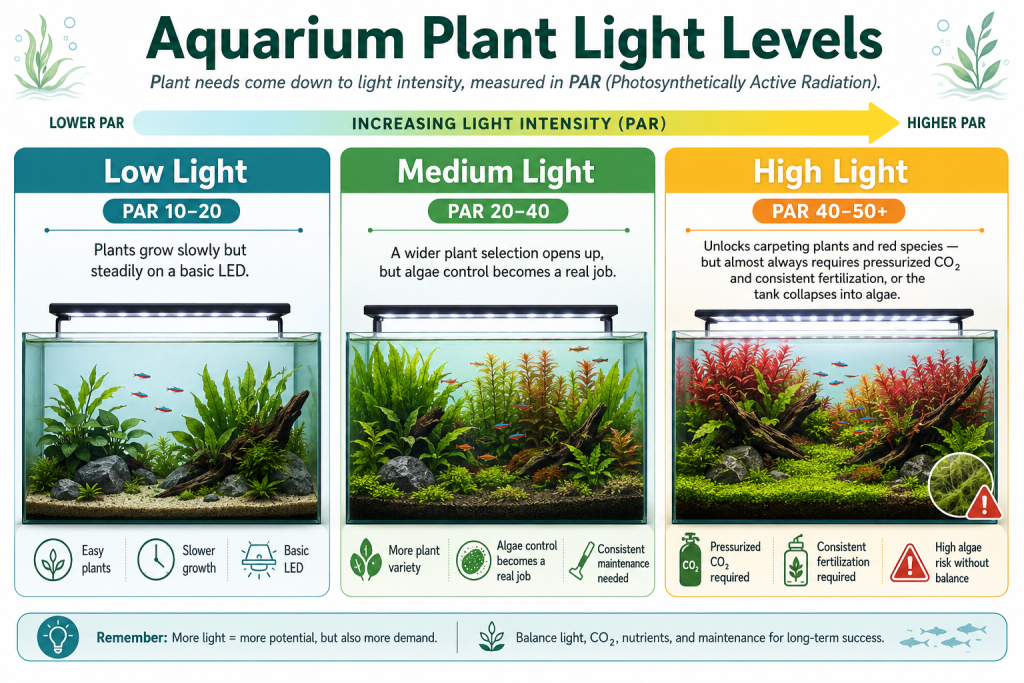
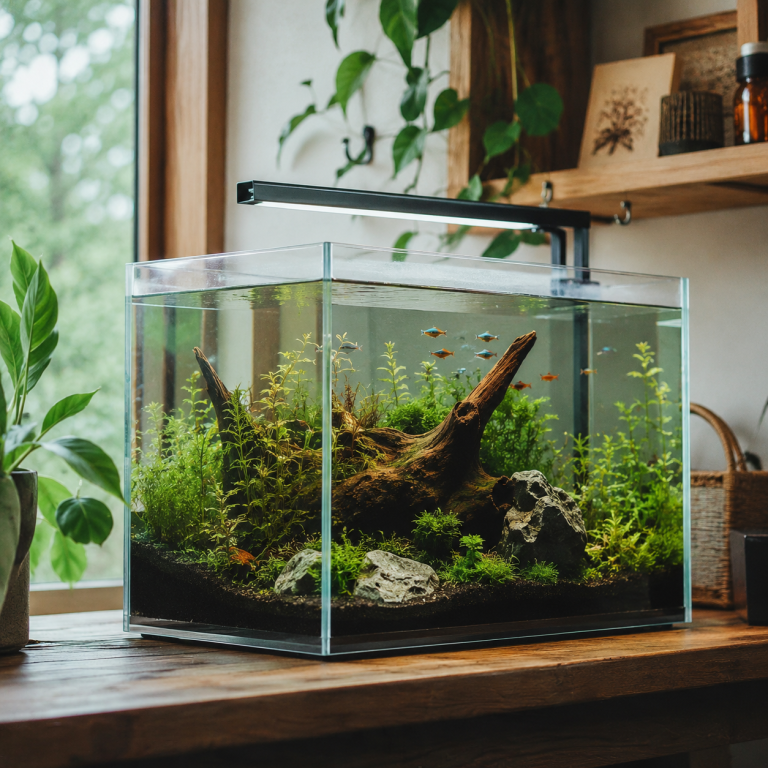
Here’s the one-sentence rule: if your light came with the tank (or is a standard budget LED) and you don’t inject CO₂, you have a low light tank. That’s not a limitation — it’s a category, and it comes with its own roster of plants that genuinely thrive in it.
What “Low Light” Actually Means (It’s Not a Dark Corner)
A common misconception: low light plants want dim, gloomy water. Not true. Low light plants are species that evolved under forest canopies and shaded riverbanks — they photosynthesize efficiently at low intensity and simply don’t need more.
For a beginner, that translates into four practical advantages:
- No CO₂ system required. At low intensity, the CO₂ naturally present in tank water is enough.
- Any decent light works. The stock LED on most starter kits is fine.
- Slow growth = low maintenance. Less trimming, less pruning, less everything.
- Less algae pressure. Algae exploits excess light and nutrients; a slow, low-demand tank gives it far less to work with.
In hobby terms, this is the foundation of a low tech planted tank — and it’s how experienced aquascapers recommend everyone starts.
5 Low Light Plants That Are (Nearly) Impossible to Kill
Each of these has survived decades of beginner mistakes across the hobby. Each also has exactly one trap you need to know about.
1. Anubias — The Indestructible One, With One Fatal Exception
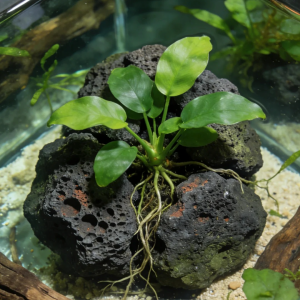
Anubias tolerates low light, neglect, hard water, soft water, and fish that chew on it. Thick, slow-growing leaves make it the single most forgiving plant in the hobby.
The trap: Anubias is an epiphyte. Its thick horizontal stem — the rhizome — must stay above the substrate. Attach it to driftwood or rock with thread, fishing line, or aquarium-safe glue. Bury the rhizome in gravel or sand and it will rot within weeks. This single mistake kills more Anubias than every other cause combined.
2. Java Fern — The Self-Replicating Workhorse
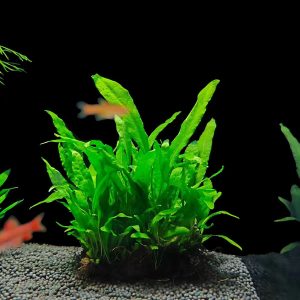
Java fern shares Anubias’s rulebook: tie or glue it to hardscape, never bury the rhizome, give it low light, ignore it. It grows a bit faster than Anubias and comes in several leaf shapes (standard, narrow, ‘Windeløv’ with frilled tips).
The bonus: mature leaves sprout tiny baby plants — plantlets — directly on their surface. When a leaf grows a miniature fern complete with roots, pinch it off and attach it somewhere new. Free plants, forever.
3. Java Moss — Impossible to Plant Wrong
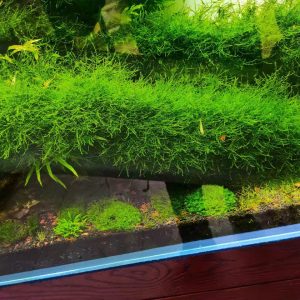
Java moss has no roots to bury and no rhizome to rot. Wedges into cracks, wraps around wood, forms carpets over mesh, floats in a clump — every approach works. Shrimp and fry treat it as prime real estate, which makes it functional as well as bulletproof.
The only caveat: it grows into untidy tangles over time. Trim it with scissors occasionally and it’ll stay dense instead of stringy.
4. Cryptocoryne — The One Low Light Plant You Do Plant in the Substrate
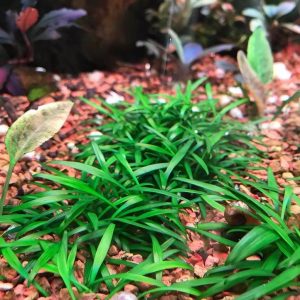
Crypts (“cryptocoryne wendtii” is the classic starter) are root feeders, so these go into the gravel or sand, root tabs appreciated but not mandatory. They’re slow, undemanding, and fill midground space beautifully.
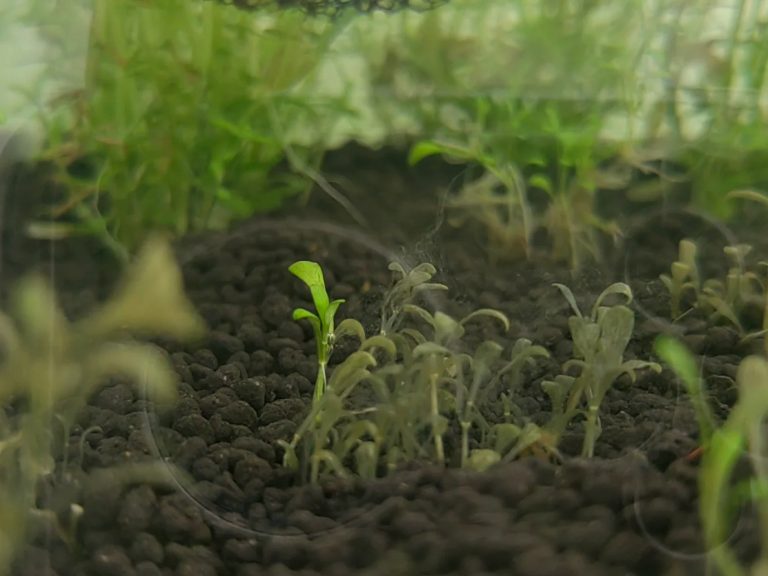
The trap — and it’s a big one: crypts famously “melt.” A week or two after planting, the leaves may turn translucent and dissolve entirely. This is not death. It’s the plant shedding its old emersed-grown leaves and growing new underwater-adapted ones. The roots are alive. Leave it alone, and fresh leaves typically emerge within 2–4 weeks. Thousands of healthy crypts have been thrown away by beginners who didn’t know this. Now you do.
5. Amazon Sword & Floaters — Two Easy Ways to Fill Space
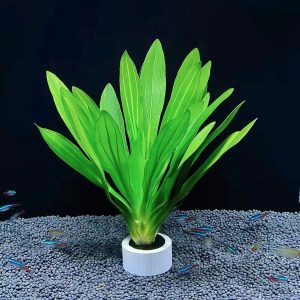
Amazon sword is a root-feeding rosette plant that grows large and dramatic even in modest light. Push a root tab into the substrate beneath it every 4–6 weeks and it will anchor a tank for years.
Floaters (water lettuce, frogbit, salvinia) skip planting entirely — drop them on the surface. They grow fast, shade the tank below (which low light plants appreciate), and absorb nitrates directly from the water column, quietly improving your water quality as a side effect.
3 Ways Beginners Still Kill Low Light Plants
Even bulletproof plants lose to these three mistakes:
- Burying rhizomes. Worth repeating: Anubias and Java fern rot if their rhizome goes under the substrate. Attach, don’t plant.
- Running the light too long. Low light plants need only 6–8 hours of light per day. A 12-hour photoperiod doesn’t grow plants faster — it grows algae, which then smothers the plants. Use a cheap outlet timer and set it once.
- Over-fertilizing. A low light tank consumes nutrients slowly. Heavy liquid fertilizer dosing outpaces what the plants use, and algae harvests the surplus. Start with a half dose once a week — or skip fertilizer entirely for the first month and watch how the tank responds.
FAQ
Can aquarium plants grow without CO₂? Yes. Low light plants like Anubias, Java fern, Java moss, and cryptocoryne grow well using only the CO₂ naturally present in tank water. CO₂ injection only becomes necessary for high light, fast-growing, or carpeting plants.
Can I plant Anubias in the substrate? No. Anubias is an epiphyte — its rhizome (the thick horizontal stem) rots when buried. Instead, tie or glue it to driftwood or rock, keeping the rhizome fully above the substrate. Roots may grip the surface over time on their own.
My cryptocoryne’s leaves all melted. Is it dead? Almost certainly not. Crypt melt is a normal transition response after planting: old leaves dissolve while the roots survive. Leave the plant in place, and new underwater-adapted leaves typically sprout within 2–4 weeks.
How many hours of light do low light aquarium plants need? Six to eight hours per day is the sweet spot. Longer photoperiods don’t speed up growth in low light plants — they feed algae instead. An inexpensive outlet timer keeps the schedule consistent.
Conclusion:
If your aquarium plants keep dying, match the plants to the tank you already have.
Start with Anubias and Java fern attached to hardscape, a clump of Java moss, and a cryptocoryne in the substrate. Give them 6–8 hours of light, leave the rhizomes exposed, and don’t panic if the crypt melts. Get those four thriving, and you’ll have something better than a planted tank — you’ll have the confidence to decide whether you ever want to go high-tech at all.